Prendre des cours de chant, chant et piano, chant et guitare et songwriting avec
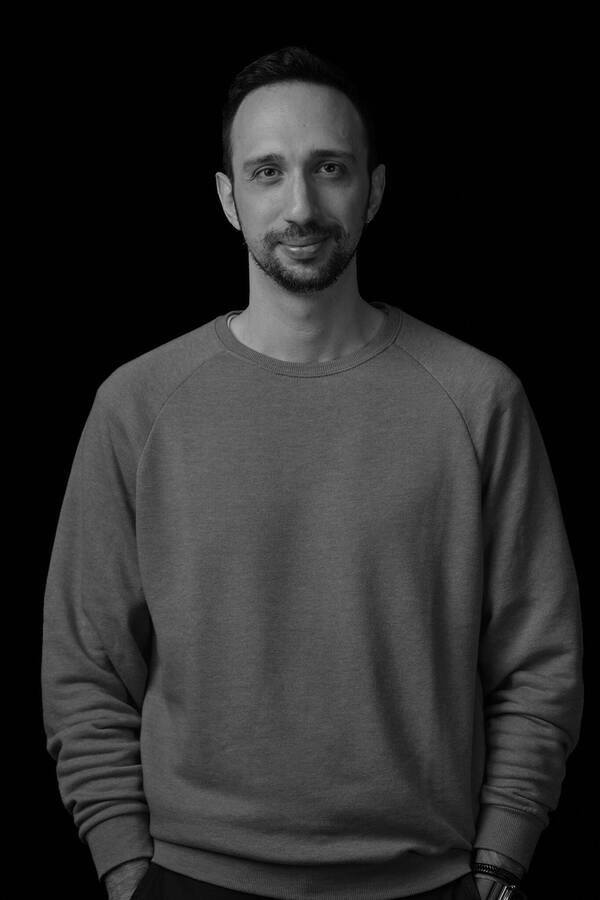
Leonardo Cavalli
Pop and Jazz Singing, Composition, Music Production
Leonardo is an Italian multi-instrumentalist singer vocal coach and composer. He is focused on jazz, pop and film music.
Contact
Poser une question au sujet de Leonardo Cavalli
S'inscrire dès à présent
une leçon d'essai sans engagement
Prix
10 leçons de 45 min.: CHF 930
Lieu
Aargauerstrasse 92
8048 Zürich
Leonardo Cavalli propose également un téléenseignement.
Instrument
Chant, chant et piano, chant et guitare et songwriting
Style musical
Pop, rock, jazz, auteur-compositeur-interprète, musique de film et Chansons Italiennes
Niveau
Débutant, Avancé et Professionnel
Langue
Anglais et italien
Âge
Leonardo Cavalli enseigne aux élèves à partir de 14 ans
Je te l'amène
- Vocal Technique
- Pop and Jazz Repertoire & Interpretation
- Piano and Guitar accompaniment
- Songwriting
- Music Production
Formation
Academic Titles:
- ZHdK, Zürich [Currently]
Master in Composition for Film, Theatre and Media - Conservatory "Francesco Venezze”, Rovigo [10/2025]
Master's Degree in Film Music Composition - Conservatory "Francesco Venezze”, Rovigo [2023]
II Level Postgraduate Master's Degree in Film Music Composition - Conservatory “Giuseppe Verdi”, Milan [2022]
Master's Degree in Jazz Composition - Conservatory “Giuseppe Verdi”, Milan [2021]
Course in anthropo-psycho-pedagogic disciplines and teaching methodologies - Scuola Civica di Musica “Claudio Abbado”, Milan [2020]
Bachelor's Degree in Jazz Vocals
Masterclasses:
- Masterclass “La Voce Artistica” (The Artistic Voice) [2020]
(with phoniatrist Dr. Nico Paolo Paolillo and speech therapist Dr. Elisabetta Rosa at Id'a Lab, Cusano Milanino) - Masterclass “Il Canto degli Armonici” (Singing the Overtones) [2019]
(with Andrea de Luca at Scuola Civica di Musica Claudio Abbado, Milan) - 30th Nuoro Jazz Summer Seminars as a singer [2018]
(with international masterclass of the jazz guitarist Peter Bernstein) - 29th Nuoro Jazz Summer Seminars as a singer [2017]
(with international masterclass of the jazz pianist Kenny Barron) - Masterclass in Applied Phoniatrics [2017]
(with phoniatrist Professor Franco Fussi at NAM, Milan)
Projets
- I work primarily as a vocal coach, composer and music producer, providing artistic and technical support to singers and musical projects.
- Leonardo Cavalli
Je t'apporte volontiers des morceaux / oeuvres de ces artistes / compositeurs que j'apprécie
Stevie Wonder, Jimi Hendrix, Elton John, David Bowie, Bruno Mars, Frank Sinatra, Ella Fitzgerald, Pink Floyd, Gino Paoli, Fabrizio De André, Francesco de Gregori, Mina, John Williams et Ennio Morricone
Interview avec Leonardo Cavalli
Which musician has influenced you the most?
It would be difficult to choose just one. Great performers like Jimi Hendrix, Elton John, and legendary crooners like Frank Sinatra and Tony Bennett have played a significant role in my development as a singer and player. The progressive rock records I used to listen to with my father as a child, such as those by Pink Floyd and Genesis, as well as the soundtracks composed by John Williams and Ennio Morricone, have been fundamental in shaping my composer side.
What can you teach me better on your instrument than any other teacher?
What makes my teaching approach unique is my background not only as a singer, but also as a multi-instrumentalist, composer, and music producer. This broad musical experience allows me to approach vocal training from different perspectives, helping students understand not just how to use their voice, but also how it connects with music as a whole.
Over the years, I've learned that every student has their own strengths, challenges, and musical goals. That's why I tailor my lessons to each individual's experience, interests, and needs, combining vocal technique, musical expression, and practical exercises in a way that feels natural and engaging.
Above all, I see the voice as a versatile and expressive instrument. My goal is to help students develop a solid vocal technique, build confidence, discover their own sound, and enjoy the process of playing or making music.
How did you learn to play your instrument?
I started my musical journey as a child, first studying classical piano for many years at my local music school, then studying guitar as a self-taught and playing in many bands. But the real turning point came at 17, when I took my first singing lessons with a teacher who ignited my passion for music and showed me its transformative power. It was through that experience that I found the courage to pursue academic studies and fully dedicate myself to a life in music.
How do you go about writing a song or composing a piece yourself?
My creative process usually starts with a concept or an emotion I want to express. Inspiration might come from the theme of a festival I'm performing at, a film or theatre production I'm composing for, or simply a personal idea.
From there, I begin exploring musical ideas, sometimes a melody, sometimes a riff or a particular sound, and gradually develop them into the structure of the piece. Then comes my favourite part: arranging and producing the music. This is where I bring the composition to life, choosing instruments, experimenting with sounds, and adding layers and textures to create the right atmosphere. For me, it's like dressing the music, giving it its own identity and shaping it to fully express the emotion or mood that inspired it in the first place.
What equipment do you play on today?
At the heart of my performances is my MacBook Pro, which brings together and processes the sounds of my instruments, including microphones, guitars, keyboard controllers and my Moog synthesizer. This allows me to combine different musical elements and create a rich, unified sound. For more experimental projects, I also use Max/MSP to create immersive sound experiences, where music elements moves around and surround the audience. For recording and music production, I mainly use Cubase Pro, while Dorico Pro is my go-to software for composing and writing music. I'm an official Steinberg Certified User of both programs.
What personal characteristic has helped you the most when practicing?
Surely, it's my curiosity, because it's thanks to it that I'm always motivated to delve into new topics, seeing everything new as a challenge to improve myself.
What does your instrument have that others don't?
The voice is the musical "instruments" that connect most deeply to the soul of every artist. I believe that, at least in my case, they embody my personal experiences, emotions, certainties, and vulnerabilities, making both truly unique and deeply personal.
What do you pay particular attention to when teaching?
For me, empathy is essential, because the study singing and composition involves multiple aspects of sensitivity.
That's why it's crucial to always be mindful of how we relate to the student, who, whether in a lesson or on stage, is exposing facets of their personality they may not always be used to showing. Therefore, every observation or piece of advice must be conveyed with the utmost care and sensitivity.
How do you structure your music lessons?
I start with a vocal warm-up, then move on to vocal technique exercises. In the second half of the lesson, I focus on repertoire study.
Depending on the student's needs and the lesson duration, I may include sight-reading exercises, piano or guitar practice, or cover music theory or technology topics. Each part of the lesson is always approached from a musical perspective. I don't rely solely on the student's ear; instead, I guide them through a path of increasing awareness to ensure consistent progress.
How do you relate to children?
When I have taught children, both in individual and group classes, I've always tried to connect with them by putting them on the same level as me and involving them actively in the lesson. I find that, at least in my case, this approach has led to great results, making the lessons stimulating for both sides.
What has been your greatest experience as a musician so far?
My greatest experience was conducting my suite titled "Universe”, in Sala Verdi, one of the best concert hall in Milan. For the first time, I had the opportunity to lead a 60-piece orchestra performing my original compositions. The orchestra consisted of a jazz big band and a chamber orchestra with strings, woodwinds, harp and percussion sections. It marked the culmination of a nearly year-long project during which I composed and arranged 40 minutes of original music.
What was the biggest stage you have played on?
I couldn't say which is the biggest, but I have performed in some of the most important theaters in Milan, such as the "Teatro Grassi”, the "La Verdi" auditorium and beautiful location as “Villa Arconati”.
Which musician would you like to play with?
My dream is to perform an original composition, either as a singer or as a conductor, with the Metropole Orkest.
Which record would you take with you to a desert island?
I think it would be “Scratch My Back” by Peter Gabriel. Gabriel's voice and John Metcalfe's orchestral arrangements in the cover of David Bowie's Heroes give me shivers every time I listen to it.
Which stage would you most like to play on or do you most like to play on?
In general, I love theaters. I find them to be the perfect place to create a connection between artists and the audience through music.
What else is important in your life besides music?
I think it is essential to nurture friendships and make time for new experiences, even outside of music, that can enrich my personal and artistic journey.
Recommandation pour Leonardo Cavalli
Emanuele, 40, employee, Rüti
Helena, 67, weiblich , Rapperswil
Stefano, 60, Selbständig, Dübendorf
Filippo, 30, Zürich
Flavio, 29, Zurich
Mariko, 29, software engineer, Zurich
Alexander, 18, Zürich
Max, Zurich
Felicity, Felicity, 34, Sprachdozentin, Zürich
Mattia, 34, impiegato, zurigo
Philip, 26, Berater, Zürich
Rene, 61. Sekundarlehrer, Zürich