Lezioni di canto e pianoforte con
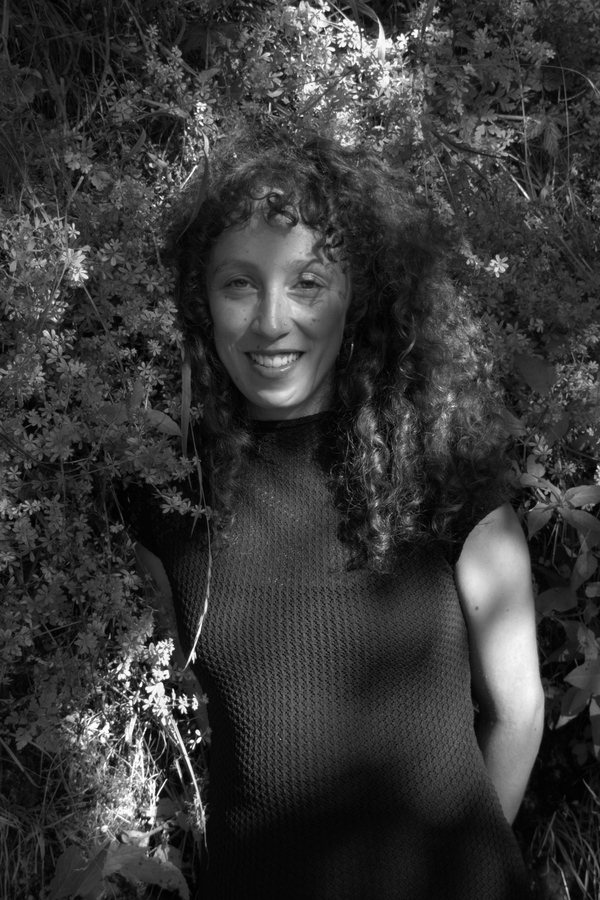
Lélia Rassat
Voice and piano: technique, theory and improvisation
Lélia is a French multi-instrumentalist that studies voice and double bass at HKB Jazz and Contemporary Music. Deeply influenced by classical music, she now moves between this heritage and jazz and improvised music.
Prezzo
10 lezioni di 45 min.: CHF 840
Die Probelektion ist unverbindlich und kostet CHF 84. Wenn danach ein Abo abgeschlossen wird, gilt die Probelektion als erste Lektion vom Abo. Wenn nicht, wird diese einzeln verrechnet.
Per i bambini, sono possibili anche lezioni di 30 minuti.
Ubicazione
Sulgenau
3007 Bern
Strumento
Canto e pianoforte
Genere musicale
Jazz , musica classica, pop, improvvisazione libera , samba e bossa nova
Livello
Principianti e Avanzati
Lingua
Inglese e francese
Età
Lélia Rassat insegna allievi da 6 anni
T'insegno quanto segue
- Vocal technique
- Theory including : Rhythm, harmony, ear training
- Improvisation, extended techniques
- Learning pieces
- Playing in bands
Formazione
Classical piano with several teachers in France
Ecole de Jazz de Genève - Voice and doublebass - Soraya Berent and Ninn Langel
HKB - Bachelor Jazz and contemporary music - Cansu Tanrikulu and Patrice Moret
Progetti
Octandria, Xhe tarr +6, The Peacocks
T'insegno preferibilmente i brani / lavori dei seguenti artisti / compositori
Ella Fitzgerald, Cécile McLorin Salvant, Esperanza Spalding, Carmen McRae, Billie Holiday, Joni Mitchell, Leïla Martial, Charlie Haden, Tania Maria, Eliane Elias, Jasmine Myra, Flora Purim, Lambert Hendricks and Ross, Erik Truffaz, Abdullah Ibrahim, George Gershwin, Horace Silver, Bill Evans, Wayne Shorter, Dave Holland, Kenny Wheeler, Chick Corea, João Gilberto, Baden Powell, Caetano Veloso, Antonio Carlos Jobim, Frédéric Chopin, Claude Debussy, Clara Schumann, Bach, Johannes Brahms, Lili Boulanger e Maurice Ravel
Intervista con Lélia Rassat
Which musician has influenced you the most?
Many musicians from different genres have influenced me, and some will stay with me forever: Gershwin, whose Rhapsody in Blue I was obsessed with at the age of four after my father gave me Fantasia 2000 (an animated film built on classical pieces). Ella Fitzgerald, whose voice and virtuosity while scatting inspired me a lot when I started singing jazz. Anouar Brahem, whose oud and jazz fusion moved me in my twenties. Debussy and Ravel, because the dreamy side of Impressionism feels like home. As women have been so under-represented, I'm exploring at the moment composers like Lili Boulanger, Hildegard von Bingen, Clara Schumann and Fanny Mendelssohn.
How did you learn to play your instrument?
I grew up learning piano through classical repertoire. At 18, I moved to Montpellier, where I met a lot of jazz musicians. Jamming with them taught me the art of improvisation, and I started building my jazz vocabulary, mostly through singing. A bit later, in the same musical circle, I tried the double bass and instantly fell in love with it.
How do you proceed when you write a song or compose a piece yourself?
I mostly compose at the piano. An idea often starts with a sound, like a bird singing or a storm. Then I loop chord progressions again and again, until I fall into a kind of trance. From there, the music branches out and grows naturally.
What equipment do you play on today?
For now, I sing with a Shure SM58, a popular microphone known for being sturdy and easy to get. It does the job, but it's not the best match for my voice. I would like to upgrade soon to a microphone like the Shure Beta 87A or 87C, which captures more detail and has a warmer sound.
Which personal quality has helped you the most when practising?
Like a lot of students, I started out impatient, eager to master each piece as quickly as possible. But rushing mostly left me frustrated, because the end result was never as precise as I wanted it to be.
Then I started to understand that learning works best when it's slow and mindful. The more time you take to observe and understand, the more detail you begin to see.
What does your instrument have that others don't?
The voice offers endless possibilities. It changes with your emotions, physical condition... so it's never exactly the same from one day to the next. You never finish exploring all the textures and sounds it can create.
The piano, on the other hand, is incredibly versatile. Its keyboard is a very clear and visual map of music. Understanding harmony becomes super easy, and it's rewarding to get a good sound right away: to create a round and beautiful note, all you have to do is press the key.
What do you pay particular attention to when teaching?
What matters most to me is that my students feel comfortable and relaxed. Learning an instrument or your voice should never feel like a source of pressure, so I always adapt my teaching to each person's needs, pace and personality. We are first here to enjoy!
To me, a good lesson starts with the body. I make a point of beginning with relaxation and breathing, because I believe it's essential to feel connected, grounded and calm before approaching any instrument. When the body is at ease and the breath is free, everything becomes simpler: the sound is warmer, the gestures are more fluid, and the mind is more open to listening and learning.
This is something I experienced myself. A former opera singing teacher of mine used to start our lessons with meditation and relaxation exercises, before the vocal warm-ups and before we worked on any pieces. The progress I made at that time was striking. It showed me how much room for improvement can open up when you first take the time to settle in and be present, and it's an approach I now carry into my own teaching.
How do you structure your music lessons?
Like I said earlier, I like to start with a little moment to relax the body, using breathing and gentle movement. I do this for both piano and singing.
Then we warm up the fingers or the voice with some technical work.
After that, it really depends on the student and what they feel like doing. Some days we learn a piece, other days we improvise freely or just play around with sounds and see what comes out. I like to keep things open and light, so everyone enjoys the lesson!
How do you approach teaching children?
The most important thing with children is to keep the joy alive. I adapt to each child's pace and use games, movement and imagination so they feel relaxed and curious. I want them to look forward to their lessons, just like I did as a child.
What has been your best experience as a musician so far?
Recently, I sang at a friend's master's concert with close friends who are exceptional musicians. We connected so well. Everything felt easy and natural. I realised how positive a group that works well together can be, and how important it is to have fun on stage!
What was the biggest stage you have played on?
It wasn't a big stage, but it was probably the most beautiful place I've ever played. It was in Briançon, in France, at a festival organised by friends. I was playing as a duo with a friend who plays guitar. Besides performing in front of a breathtaking view, the atmosphere was amazing. I don't think I've ever felt so much love on stage as I did that day.
Which musician would you like to play with one day?
One of my dreams is to travel to Algeria and learn Amazigh (Berber) music from local musicians. Algeria is my second nationality, but I've never had the chance to go there. I've heard that some of my family there, whom I've never met, are musicians. I think it would be powerful to meet them through music.
Which one record would you take to a desert island?
Blue Maqams of Anouar Brahem. I could never get tired of it.
On which stage would you most like to play, or do you most enjoy playing?
It's less about a place than a feeling: a strong connection between the musicians and the audience, so caught up in the journey that people dance freely.
Besides music, what else is important in your life?
Being surrounded by my family and close friends, eating delicious meals, dancing, walking, observing nature and listening to the birds!