Lezioni di chitarra, basso elettrico, batteria e songwriting con
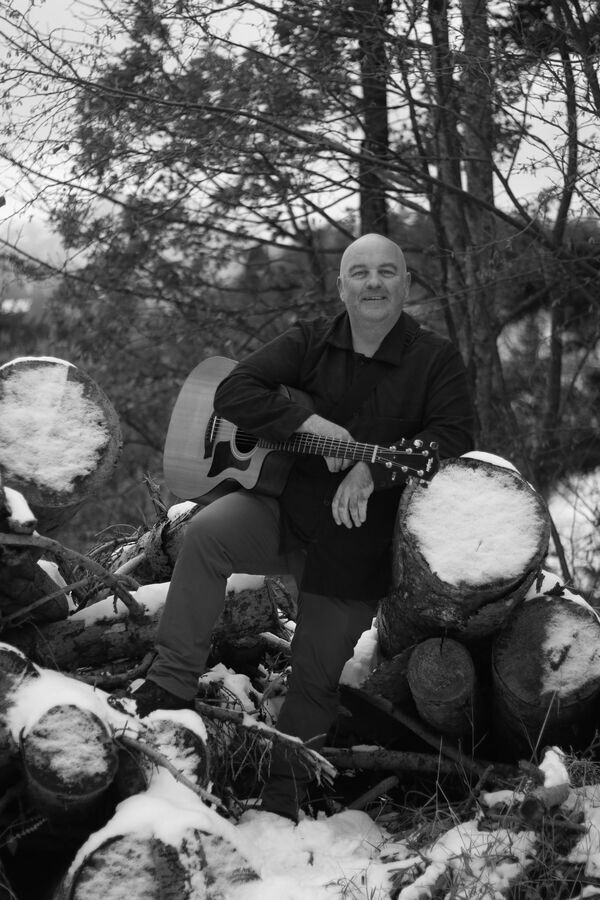
Dave Bradley
Guitar, Bass, Drums, Songwriting and Theory for Pop, Rock and Folk
Dave is a highly regarded singer/guitarist in bands playing throughout Switzerland, and has been teaching for over 25 years.
Prezzo
10 lezioni di 45 min.: CHF 840
Per i bambini, sono possibili anche lezioni di 30 minuti.
Ubicazione
Leysarium
Route des Ormonts 30
1854 Leysin
Dave Bradley offre anche l'insegnamento a distanza.
Strumento
Chitarra, basso elettrico, batteria e songwriting
Genere musicale
Pop, rock e musica folcloristica
Livello
Principianti e Avanzati
Lingua
Inglese e francese
Età
Dave Bradley insegna allievi da 6 anni
T'insegno quanto segue
Formazione
Detroit Institute of Musical Education, in collaboration with the University of Fallmouth - Bachelor of Arts in Creative Music Performance.
Progetti
T'insegno preferibilmente i brani / lavori dei seguenti artisti / compositori
Jimi Hendrix, Eric Clapton, Tom Petty & the Heartbreakers, Queen, The Eagles, The Beatles, Bob Dylan, Pink Floyd, Dire Straits, The rolling Stones, CCR e Bob Marley
Intervista con Dave Bradley
Which musician has influenced you the most?
Probably Eric Clapton. I was a big fan from a young age of his time with John Mayall and The Bluesbreakers, Cream, and of course, his solo work. I loved the sound and his ability and so I learned a good number of his songs and solos and have played them in bands and solo over the years. If my favourite musician is not EC, then it would probably be my cousin. He was the real deal and made me realise it wasn't just a dream.
What can you teach me on your instrument better than any other teacher?
Music teachers tend to share knowledge. What I would argue makes me stand out as a teacher is my enthusiasm to encourage others to learn and realise their own passion for music, for life. Importantly, I can also teach you how to care for your instrument.
How did you learn to play your instrument?
I remember the sound, and the energy that came with it. I realised a burning desire, a need to be able to make those sounds and produce that energy. To be in the mix and experience it all first-hand. It was a must for me. I had no choice. I had to learn. On my journey, I have realised many challenges, one was simply to be able to play without making regular mistakes. I knew the answer was in regular practice and to break riffs and solos down into sections that I would repeat over and over until it was difficult to make a mistake, thus, becoming more at one with my instrument. I also remember the slow speed of learning, as I was not from the digital age, I learned from tape cassettes, hitting play, stop, rewind, trying to figure out what the heck players like Slash were actually doing. It's all very different now with so many learning resource choices, but it's still all part of the journey.
What is your process when you write a song or compose a piece?
I try to be playful with my process. I try to mix it up, or take different approaches in an experimental effort to see what it produces. For example, I might wake up with an idea in my head. I tend to sing it, then play it on my guitar, then record these basic ideas. I then develop the idea into a song, by adding melody, chords and lyrics. I then tend to share with others for feedback. Arrangement decisions then come into play, and then I'm ready to start recording - keeping in mind that all parts are still free-floating. They can change at any time. Often, when I'm playing through what I have so far developed, other ideas come to either replace or add to what I have.
To mix it up, I try working with other composers/musicians, I share my ideas in conversations and invite input from others. You never know what will come. I also try using other instruments to learn what different parts will stem from them. For example, I don't play piano, but because of my knowledge of how music works, I decided to try to compose using piano. I chose a key and a scale and I had a couple of songs in mind whose energy I wanted to recreate in my new song. I set about trying to find a melody. Through trial and error, I created a beautiful melody, and worked out chords. I then began to write lyrics until I had what I believed to be the bare bones of a song.
In any case, I really believe it is so important to set parameters before you go exploring ideas. Like in the ideas I mentioned before - choose a key, choose a scale, choose an instrument, have an idea of the emotion you want to express in the song, or an idea of the song's subject. Then explore and see what you find - and don't stop developing it until you're satisfied with what you've done and it makes you feel great to listen back to it.
What equipment do you currently use?
I have two acoustic (Tanglewood and Taylor) and three electric (Keisel, Carvin and Fender Strat) guitars. I like the tonal range of the Tanglewood, and the Taylor is lovely to play. I tend to use one for standard tuning and the other for alternate tunings - usually DADF#AD. About ten years ago, I discovered Carvin guitars. They have evolved into Keisel guitars and they are top quality and an excellent playing experience. Everything is smooth. I have an ST model and their Osiris headless guitar. The ST is perfect for staying in tune through cold Swiss winters, including outdoor gigs, and the Osiris is a talking point and is light-weight. I'd be happy to play these guitars for the rest of my days. I use Helix effects. I like programming my own effects and playing around with them. I have a decent Cort bass and a nice Ibanez acoustic bass. Both feel nice and smooth to play, though I'd love a Sandberg, or a Sire Marcus Miller. Those are really nice. My current kit is an electronic EF-Note. I used to play Roland kits, but since hearing and playing the EF-Note at Boullard Music in Morge, I have a new love - and they look great. I could talk all day about equipment; there's so much to cover, from instruments and accessories to sound and studio gear.
What personal quality has helped you most in your practice?
The love of music - the sound, the vibe, the feel, the accompanying emotions, all lead to the drive and need to make music. However, this is very generic. If I were to be more specific, I would have to argue that it is a critical mindset that helps me most in my practice. A need to identify my weaknesses and develop ways/practices to overcome them. In the end, I need to be able to play at a level that satisfies my own ears.
What does your instrument have that others don't?
A customised design. Keisel offer a high level of customisation. For example, for my Osiris, I decided on an orangeburst body with a purple heart fingerboard that has glow-in-the-dark Luminlay inlays. I thought it was wild and had the potential to be unsightly. I was pleasantly surprised when it arrived. I love it. Other than these points, the most important thing my instrument has that others don't, is me. Haha!
What do you pay particular attention to when teaching?
It may sound cliché, but I want my students to learn. I want them to get value for money, so I use my abilities as a teacher and as a musician to help my students understand concepts and practices and what it takes to reach a performance-ready level.
I also want them to have fun. I love to have fun while teaching, so I also encourage this in my lessons. After all, the interaction between a teacher and a student is a relationship. I would rather form relations that are at least pleasantly memorable.
How do you structure your music lessons?
It depends on the student's preference and the learning outcomes agreed upon. If we agree on a particular technique or theory to learn, I structure the learning and resources accordingly. If the student wishes to lead the lesson, I'm happy with that, provided I believe learning opportunities exist. This may mean the lesson deliberately lacks structure but has intended learning outcomes. However, my lessons generally involve a recap of the last lesson, clarifying goals for the current lesson, and teaching concepts and practices relevant to the session's goals. If time permits, we practice more and then review our achievements.
How do you approach teaching children?
I much prefer a one-to-one approach, as it offers a greater opportunity to win and sustain a child's focus. I'm more playful when teaching children. For example, I'm currently teaching ukulele to a 6 year old boy. His parents wanted him to learn guitar, but he's too small yet. He is very energetic, so I tend to share his excitement. I invite him to share what he's excited about that day, using this to gain his attention for the lesson. For example, when teaching chords and rhythm, I use his story to make up a song that uses the chords we are learning. He not only seems to love this, but he also finds it more memorable. As a result of this approach, I see him relax and enjoy our lessons, allowing him to participate and retain information rather than dominate or disassociate.
What has been your most amazing experience as a musician so far?
I think it has to be composing my own music. As a kid, I remember trying to compose, but I lacked the focus, knowledge, or perhaps the patience to produce something that satisfied me. Because of my maturity, education, life experience, and creativity, I am now able to compose at a level of quality that greatly satisfies me. I gain a feeling from composition that I get nowhere else. It's a feeling of excitement and happiness, likely because I don't fully know what comes next, but also realising that this creation is coming out of me. So, it's a process of self-actualisation, as I end up with a product I would not have expected myself capable of creating. It's a beautiful experience of pure joy.
What was the biggest stage you've ever played on?
The biggest stage I've played on would probably be in Leysin, for the Jeux Olympiques de la Jeunesse (JOJ) Olympic stage, during the winter Olympics of 2020, where I played with my band, The Music Machine.
Which musician would you most like to play with?
Maybe guitarists like Satriani, Guthrie Govan, Jimmy Herring, Buddy Guy, Albert Lee, or if possible, B.B. King, or Stevie Ray, or Scotty Moore or ... for guitar. For bass, one of the greats, like Stanley Clarke, Victor Wooten, Marcus Miller or Jaco Pastorius. For the drums, Vinnie Colaiuta, or Dave Weckl, or Neil Peart, or if possible Buddy Rich or Gene Krupa. There are too many geniuses across all instruments and genres to mention, let alone choose from. My reason for selecting any one of these iconic figures would be to pick up anything I could from them and to add it to my own teaching and learning.
Which record would you take to a desert island?
Wow! What a question. My mind automatically jumped to The Doors. I've been a big fan for quite some time. But actually, I think it would have to be something more melodic and with strong harmonies. I really liked Midlake's «The Trials of Van Occupanther». It reminds me of my kids being born - and it's just such a beautifully made album. Then again, I'm now working in partnership with a good Canadian friend, and we're composing and producing our own celtic/folk/rock album that helps me believe in humanity. I guess it would have to be that.
Which stage would you most like to play on, or which stage do you most enjoy playing on?
Any stage where the audience is in the experience with me, where we're both in sync, and can both see into the whites of our eyes, feeding off one another's energy. It's like a beautiful shared outer-body drift. I'll have some of that.
Besides music, what else is important in your life?
Family, friends, and love, and keeping them all close to my heart. Exercise, sleep and also funding help achieve this.